
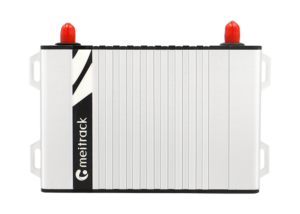
Image of T633L 4G GPS Vehicle Tracker

T633L GPS Vehicle Tracker

  • 4G Network

  • Flexible configurable I/O

  • CANbus Interface

  • Driving Behavior Analysis

T633L GPS Vehicle Tracker

The T633L is a 4G vehicle GPS tracker built for real-time location reporting plus deeper vehicle and driver data. It supports a CANbus interface and configurable I/O, so you can connect common fleet accessories like RFID or iButton driver ID, a camera, and an LED nixie tube display. Use it to monitor driving behavior, track fuel level, and capture temperature data for cargo and equipment monitoring. The hardware supports DC 11.4 to 36 V systems, includes a 400 mAh backup battery, and buffers data with onboard memory for added reliability during coverage gaps. For positioning, it uses multi-constellation GNSS (GPS, GLONASS, BEIDOU, and GALILEO) with stated accuracy down to 2.5 meters. For North America use cases, the T633L-A supports LTE bands B2, B4, and B12, making it a fit for U.S. and Canada deployments where 4G coverage and fleet reporting consistency matter.

Features

  • 2G & 3G fall back, 4G connectivity
  • Flexible configuration
  • Multifunctional
  • Driving behavior analysis

Specifications

Dimension 106 mm x 24.5 mm x 70 mm
Weight 190g
Power supply DC 11.4–36 V/1.5 A
Backup battery 400 mAh/3.7 V
Power consumption Current in sleep mode: 11 mA
Operating temperature 20°C to 55°C(normal-temperature battery)
-5°C to 75°C(high-temperature battery)
Operating humidity 5% to 95%
Working hours 45 hours in power-saving mode
4 hours in normal mode
LED Indicator Green indicator showing the GSM signal
Blue indicator showing the GPS signal
Button / Switch 1 SOS button (for sending SMS or dialing)
1 power button
Memory 8 MB buffer
Sensor 3-axis accelerometer (used to wake the device up by vibration and detect towing alerts)
Frequency band T633L-A: LTE FDD: B2/B4/B12, WCDMA: B2/B4/B5
Positioning accuracy 2.5 m
GNSS GPS/GLONASS/BEIDOU/GALILEO
I/O Port The device supports 3 digital input ports, 3 output ports, 2 AD input ports, and 1
1-Wire digital temperature sensor (iButton) interface by default. At most 9 negative
inputs OR 7 positive ports, 8 output ports, or 4 AD input ports can be configured.
2 RS485 ports (4 pins) for connecting to the LED Nixie Tube Display
2 RS485 ports (4 pins) for connecting to the camera
1 CAN bus interface (FMS protocol)
1 RS232 port (8 pins) for connecting to the RFID card reader or ultrasonic fuel sensor
1 extended RS232 port (4 pins) for connecting to the RFID reader or ultrasonic fuel
sensor
1 audio port (3.5 mm)
1 Micro USB port

Accessories

  • External 4G antenna
  • External GPS antenna
  • USB cable
  • CANBUS converter cable
  • CD download card
  • I/O cable with an SOS button (2 meters)

Optional Accessories

  • iButton
  • RFID Card Reader
  • Camera
  • Buzzer
  • Relay
  • A81 LED Nixie Tube Display
  • Ultrasonic fuel level sensor
  • A52 digital temperature sensor
  • A53 fuel level sensor (voltage sensor)
  • Speaker and microphone

Certificates

T633L Certificates

Frequently Asked Questions

When picking a long lasting GPS tracker, think about its battery life, different tracking settings, how accurate it is, and how tough it is. Find trackers that are strong, waterproof, and have magnetic mounts so they are easy to put in place and can handle tough conditions. For instance, the TA255 from MeitrackUSA.com has a waterproof case and magnetic mount, making it good for many situations. Also, check its alert features and if it connects using 4G with 3G/2G as a backup. This will make sure you can always keep an eye on your assets.

How often you update your tracker’s location greatly affects its battery life. If it updates every few seconds, the battery drains much faster because it is constantly using GPS and sending data. But if it updates less often, like once a day, the battery can last for months or even years. Many trackers, including those from MeitrackUSA.com, have different settings. This lets you choose between tracking things in real-time and making the battery last longer. To get the most out of your tracker’s battery, you need to find the right balance for how often it updates its location.

Long-lasting GPS trackers are often made to work well in tough outdoor conditions. For example, the TA255 solar-powered GPS Tracker from MeitrackUSA.com has a strong, weatherproof case. This allows it to handle very hot or cold weather, humidity, and being outside. This makes it great for tracking metal containers that move through different weather and places. Similarly, other asset GPS Tracker are made for heavy equipment and construction sites. They have weatherproof cases and can work for years. These designs mean you can track your items reliably no matter how challenging the environment is.

To track assets well, certain features are really helpful. These include magnetic mounts for easy, hidden attachment and strong, tough designs that last in bad weather. For example, the TA255 from MeitrackUSA.com has both a magnetic system for simple setup and a weather-resistant case to guard against harsh temperatures and elements. Also useful are location systems with multiple technologies for better accuracy, motion sensors for instant alerts, geofencing to set safe areas, and tamper detection to stop theft. Together, these features make asset protection thorough and dependable.

Long-lasting GPS trackers use different communication technologies. Each choice affects battery life and coverage. Cellular options like 4G LTE-M and NB-IoT are widely used. They provide good coverage and save battery, especially for items that stay put and do not need frequent updates. LoRa (Long Range) technology uses very little power and can reach long distances. This makes it good for country areas or remote spots where cell service is limited. Satellite communication works everywhere. This is essential for tracking things in very far-off places without cell service, but it usually uses more power. The technology picked affects how quickly data is sent, how far it can reach, and how long the battery lasts for devices from companies like Meitrack. Choosing the right technology depends on where the item is, how much it moves, and how often updates are needed.
