
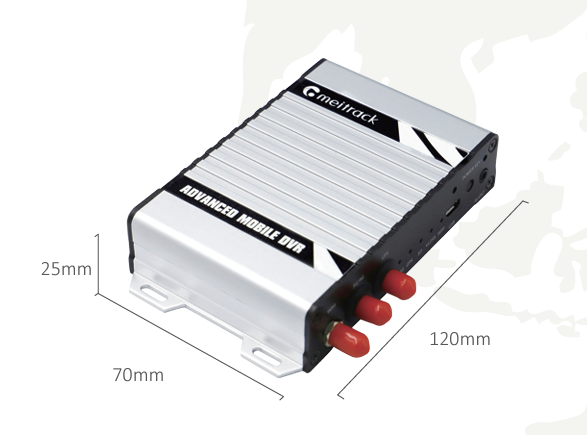
MD500S Mini Mobile DVR (AI technology)
Intelligent AHD MDVR Integrated with ADAS and DMS
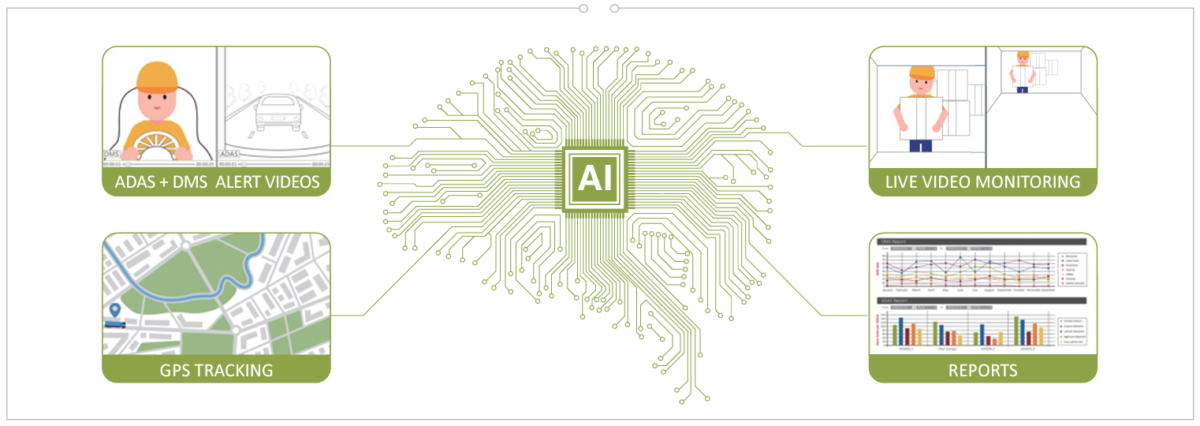
Enhancing Safety and Accountability with MDVR
A Mobile Digital Video Recorder (MDVR) is a cutting-edge technological solution designed to capture, store, and manage video and audio recordings within various mobile applications. This versatile device has rapidly gained popularity across numerous industries due to its ability to provide invaluable insights, enhance safety, and ensure accountability in a wide range of scenarios. This page will delve into the MDVR’s functionalities and its diverse array of applications.
MDVRs are equipped with high-definition cameras that record video footage in real-time. These cameras are strategically positioned both inside and outside vehicles or other mobile platforms, providing comprehensive coverage.
Many MDVRs also support audio recording, capturing conversations and ambient sounds. This feature is especially important for documenting critical details and context.
MDVRs often incorporate GPS technology, allowing users to track the exact location and route of the vehicle. This data is crucial for fleet management, route optimization, and incident reconstruction.
Users can access live feeds and recorded footage remotely through secure internet connections, enabling real-time monitoring and quick response to potential issues.
MDVRs come equipped with substantial storage capacity, typically in the form of large-capacity hard drives or memory cards. This ensures extended recording times and the ability to archive historical data.
Different Types of Applications for MDVRs
1. **Fleet Management**: MDVRs are widely used in the transportation industry to monitor commercial vehicles such as trucks, buses, and taxis. Fleet managers can track vehicle locations, driver behavior, and cargo security while ensuring the safety of passengers and drivers.
2. **Public Transportation**: Public buses and trains often employ MDVRs to safeguard passengers, deter criminal activity, and collect evidence in case of accidents or disputes.
3. **Law Enforcement**: Police vehicles are equipped with MDVRs to record interactions with the public, document traffic stops, and gather evidence for investigations and legal proceedings.
4. **Commercial Vehicles**: MDVRs are commonly installed in delivery trucks, courier vehicles, and logistics fleets to ensure the security of goods, monitor driver behavior, and provide proof of delivery.
5. **Emergency Services**: Ambulances and fire trucks utilize MDVRs to document emergency response situations, which can aid in medical assessments, insurance claims, and incident analysis.
6. **Construction and Heavy Equipment**: MDVRs are essential for heavy machinery and construction vehicles. They help prevent accidents, protect workers, and provide evidence in case of accidents or equipment misuse.
7. **School Buses**: To enhance the safety of students during transportation, school buses are often equipped with MDVRs. These devices monitor driver conduct and can serve as a deterrent against unruly behavior.
8. **Taxi and Ride-Sharing Services**: Taxis, rideshare vehicles, and other passenger transportation services use MDVRs to ensure passenger safety and document incidents during rides.
The Mobile Digital Video Recorder (MDVR) is a technology marvel with widespread applications across various industries. Its ability to record high-quality video and audio, integrate GPS data, and offer remote access make it an indispensable tool for enhancing safety, ensuring accountability, and optimizing operations in both mobile and stationary environments. Whether in the transportation sector, law enforcement, or commercial enterprises, the MDVR plays a pivotal role in improving security and operational efficiency.
Features
- All in one AI MDVR
- Small in size
- 4-Channel 720p Recording
- Configuration via WiFi
- High Stability
- Multifunctional Platform
- GPS/Glonass Communication
- 3G 4G Network
- Bluetooth/WiFi Communication
Specifications
| Dimension | 120 mm x 70 mm x 25 mm |
| Weight | 300g |
| Power input | DC: 11–36V. Rated input: 12 V/2 A |
| Power consumption | Static working mode: 65 mA Normal working mode: 600 mA (Maximum: 1100 mA) Sleep mode: 15 mA |
| Operating temperature | -20°C to 70°C |
| Sensor | Built-in 3-axis accelerometer |
| I/O port | 4 x AV-IN, 4 x Din, 2 x Dout, 2 x AD, 1 x 1-wire, 1 x RS232, 1 x CAN, 1 x AUDIO |
| Storage medium | Up to 256 GB (a class 10 or above micro SD card) |
| Operating system | Android |
| Audio interface | 3.5 mm audio interface, connected to the speaker or microphone. |
| Video input | Support 1-channel DMS, 1-channel ADAS, and 2-channel 720p cameras. Voltage output: 5 V/0.5 A |
| Resolution | Storage stream: D1 (704*576), WD1 (960*576), and 720p (1280*720). Live stream: CIF (352*288) and D1 (704*576) |
| Video compression | H.264 (Support RTMP and AVMSG video streams) |
| Audio input | 4-channel camera Mic input 1-channel 3.5 mm headphone jack input |
| Audio output | 1-channel 3.5 mm headphone jack output |
| Autio compression | ACC |
| Video search and playback | Based on the channel, recording type, bit rate type, or time |
| Recording method | General recording/alert video |
| WiFi | Internal WiFi module. Support WiFi 802.11a/802.11b/802.11g/802.11n/802.11ac. Frequency: 2.4 GHz or 5 GHz. Support AP/STA mode. |
| Bluetooth | Internal Bluetooth module. Support BT2.1 + EDR/3.0/4.1 LE/4.2BLE |
| GNSS | GPS/BeiDou/GLONASS |
| 2G/3G/4G | MD500S LTE FDD: B1/B3/B7/B8/B20/B28 LTE TDD: B38/B40 WCDMA: B1/B8 GSM: 900/1800MHzA |
Accessories
- A58 microphone
- 4G antenna
- I/O cable
- Audio cable
- WiFi Antenna
- A57 speaker
- GPS antenna
Optional
- Camera of the ADAS
- A61 temperature sensor box
- USB cable
- Bluetooth ultrasonic fuel level sensor
- Camera of the DMS
- A52 digital temperature sensor
- Relay
- AHD 720p camera
- ASUF101 & ASUF102 Bluetooth ultrasonic fuel level sensor
- iButton reader
Certificates
